
Artist Spotlight Gregory Geipel
Gregory Geipel is a fine art photographer whose work reflects the experience of growing up in post-Expo 86 Vancouver. Captured with an objective and clinical eye, Geipel explores the evolving city of his childhood the rapidly disappearing corner stores, ghostly abandoned industrial spaces, gentrifying urban enclaves and the iconic West Coast landscape that stands in bold contrast to city life.
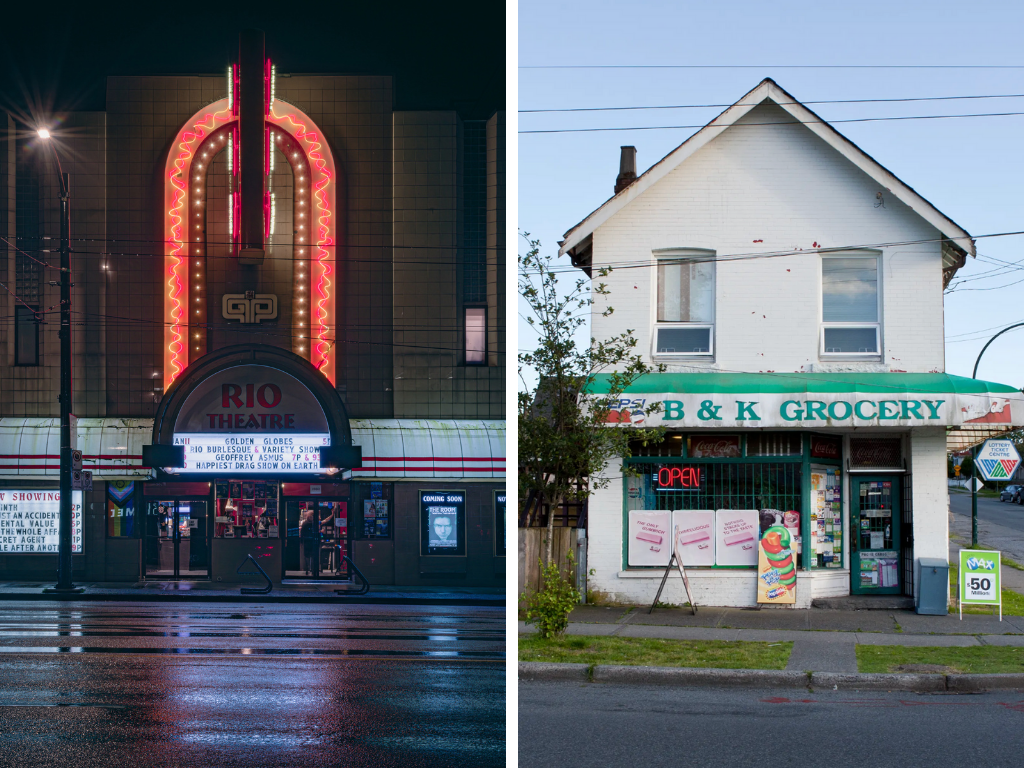
We sat down with Gregory to discuss his methodical process and the quiet persistence of the spaces he captures.
What does your creative process look like from start to finish?
"My process is rooted in documentary exploration. Much of my work involves walking and exploring streets, alleys, and hidden or overlooked spaces. Once I’ve found a subject I want to photograph, I research the best time of year and time of day to capture it at its strongest.
Because I work primarily with natural light, I use an app that shows the sun’s position throughout the year to plan each shoot. Much of my work focuses on documenting older buildings, and my goal is to bring out their character and present them at their best."
“My work is inspired by the quiet persistence of everyday places and the sense of loss that follows when they disappear.”
What does a typical day look like for you?
"A typical day often begins with observation and planning rather than shooting. I spend time walking and exploring different areas, staying open to unexpected subjects and changes in light. When I’m not photographing, I’m researching locations, studying how light interacts with specific buildings, and planning future shoots based on season and time of day.
Balancing my art with other aspects of life comes down to integrating it into my daily routine rather than separating it from everything else. Exploration, research, and reflection are all part of the process, even when I’m not actively making photographs. This approach allows the work to develop naturally over time while staying grounded in everyday life."
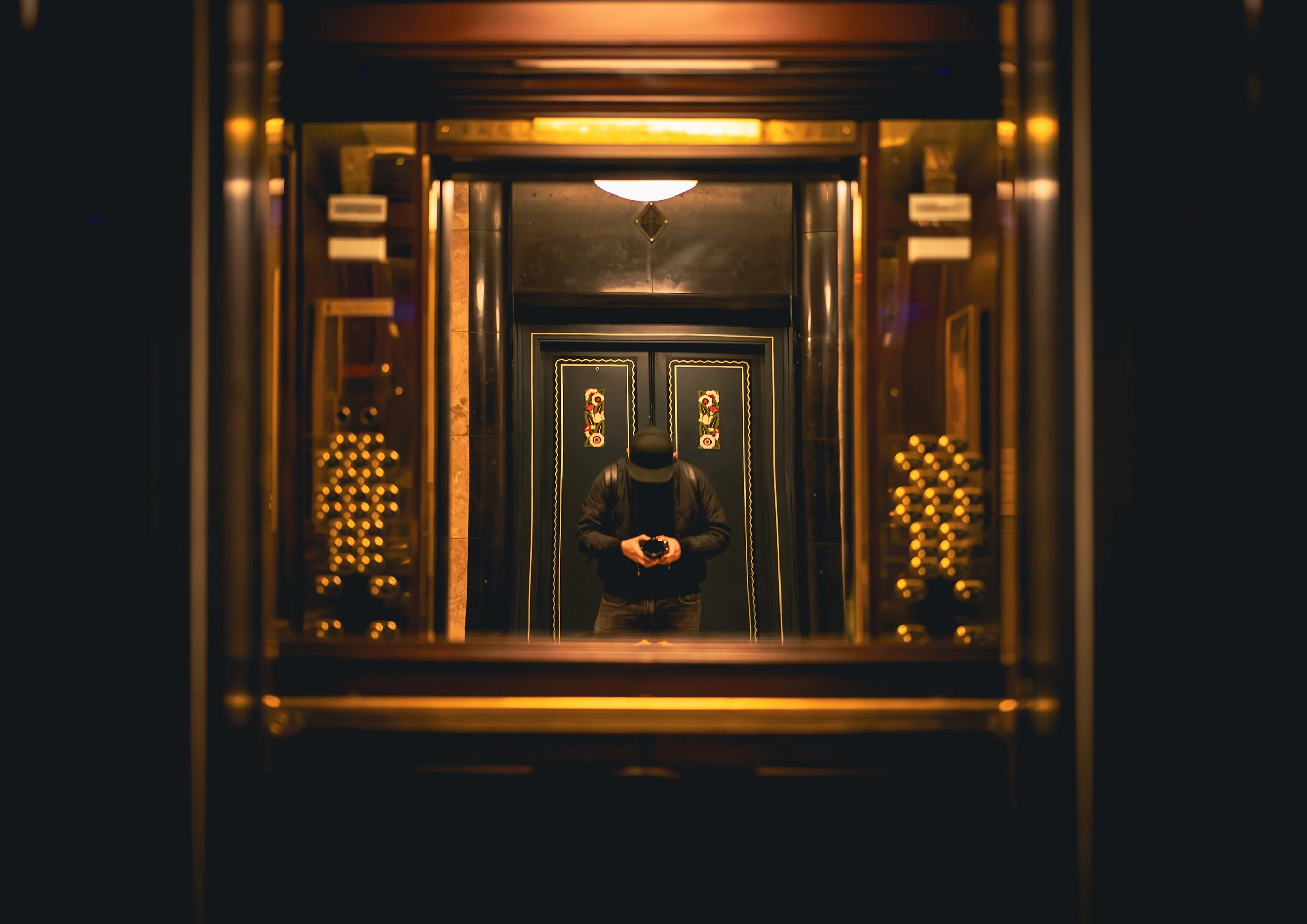
“Spending years walking the same streets has shaped how I see the city. Repeated encounters reveal subtle moments of symmetry, wear, and character—faded signage, aging facades, and small signs of adaptation that speak to endurance rather than decline.”
What inspires your work?
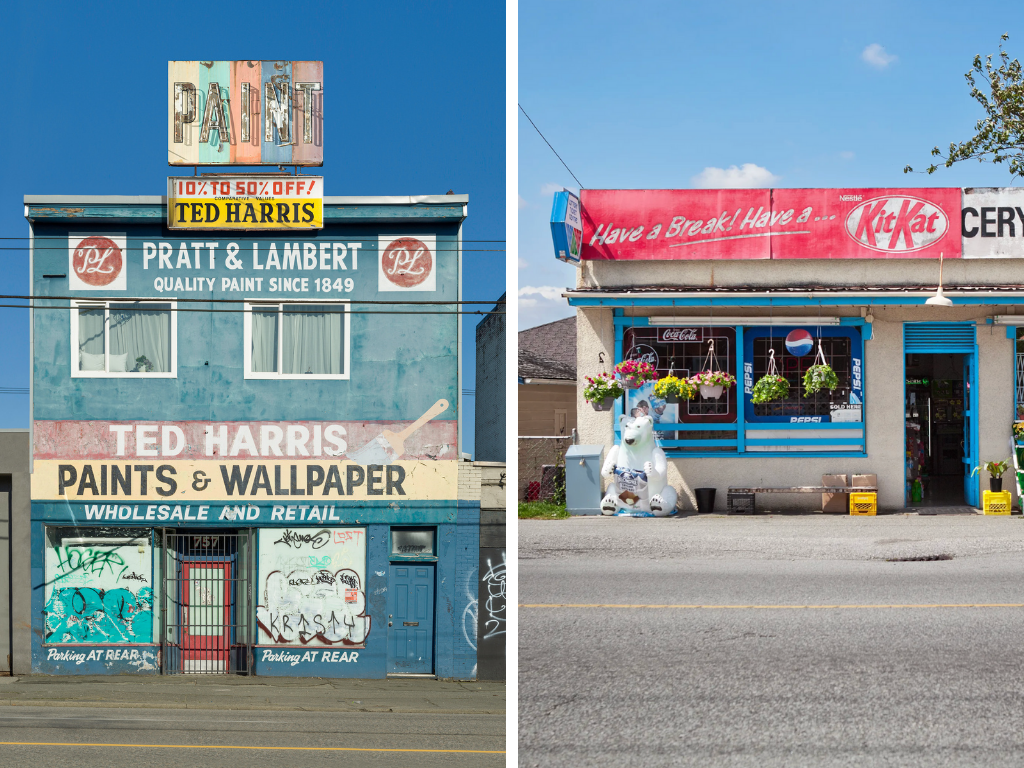
"My work is inspired by the quiet persistence of everyday places and the sense of loss that follows when they disappear. I’m drawn to structures that are familiar and deeply embedded in their neighborhoods yet often overlooked because of their modesty and routine presence. These buildings become part of the collective memory of a place, only fully noticed once they’re gone. Spending years walking the same streets has shaped how I see the city.
Repeated encounters reveal subtle moments of symmetry, wear, and character—faded signage and aging facades that speak to endurance rather than decline. At the core of my practice is an interest in time, memory, and impermanence—how ordinary structures carry communal meaning, and how photography can preserve their presence before they’re erased. The work is rooted in a long-term relationship with Vancouver, shaped as much by what remains as by what has been lost."
What are some challenges you’ve faced as an artist?
"One of the ongoing challenges in my practice has been the need to continually assert photography as a legitimate art form. Even with gallery representation, I’ve encountered moments where the medium is subtly diminished—such as having work introduced with qualifiers like 'I know it’s just a photo, but…'. Over time, I’ve learned to let the work speak for itself and to stand firmly behind the choices I make, trusting that the intent and rigor of the process will resonate with the right audience.
Another challenge has been navigating external expectations about narrative and meaning. Rather than expanding the narrative, I’ve come to embrace limitation as a strength, allowing ambiguity and silence to remain part of the work. These challenges have reinforced the importance of staying committed to a clear visual language and resisting the pressure to over-explain, maintaining a practice grounded in observation, patience, and trust in the medium."
How has your art evolved over time?
"Over time, my work has become more refined and intentional. Early on, the focus was largely on responding to what I encountered in the moment, but as the practice developed, patience and repetition became more central to the process. Returning to the same streets and structures over long periods has allowed the work to slow down and deepen, adopting a more methodical approach and waiting for the right conditions rather than forcing an image.
This slower pace has brought greater clarity to the work, reinforcing a restrained visual language and a consistent sense of quiet. While the subject matter has remained largely the same, the approach has evolved toward simplicity and precision. By allowing the work to unfold gradually, the photographs have become less about immediacy and more about presence, endurance, and the passage of time."
Can you share a personal story that significantly impacted your art or artistic journey?
"One of the most impactful moments in my artistic journey came during my photography school graduation show. A teacher and photographer I deeply respect told our class, 'Don’t be upset if no one likes your work.' At the time, it was confronting—it felt almost dismissive in a moment that was supposed to be affirming. Over time, that advice became foundational to how I approach my work, clarifying the importance of making photographs for myself rather than for approval or validation.
In a culture driven by social media and instant feedback, it’s easy to gravitate toward styles that generate quick approval. That moment helped me resist that pull and trust a slower, more personal approach. Focusing on what I want to convey has allowed the work to remain honest and consistent; if the work is true to its intent, any recognition that follows feels secondary—and more meaningful—because it isn’t the motivation behind the work."